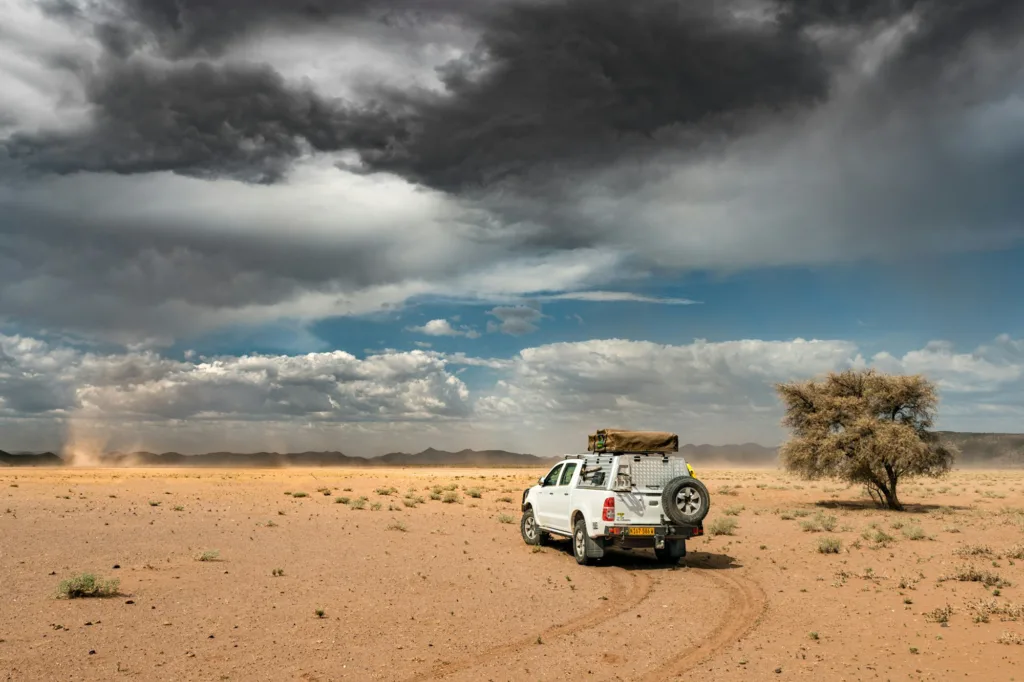
Namibia is one of the most sparsely populated countries on Earth and an ideal place for those looking to get away from it all. Despite the harsh desert environment, the landscape is teeming with life and boasts Africa's largest cheetah population and herds of desert-adapted elephants and rhinos. We recommend a visit to the otherworldly dunes of Namib-Naukluft National Park and the remote Skeleton Coast. Flight transfers between these locations in light aircraft are the best way to get around but are also scenic enough to be the highlight of your trip. Travelers seeking a more complete safari experience should also add Etosha National Park to their itinerary.
Go for otherworldly desert landscapes and adventurous self-drive safaris.
Each dimension is rated 0–3: 0 = not offered / avoid, 1 = fair, 2 = good, 3 = excellent. For the monthly strip, a higher score means a better time to travel.
These are our own expert ratings, drawn from years of planning and operating safaris across Africa. They reflect first-hand experience and traveler feedback rather than measured statistics, and conditions vary year to year.
Source: Fauna Travel Safari Seasonality & Suitability Ratings, updated 2026-10-05 — https://faunatravel.com/destination/africa/namibia
Monthly averages at Etosha · 2021–2025. Bars show rainfall; lines show average daily high and low.
Source: historical daily reanalysis from Open-Meteo (ERA5), averaged over 2021–2025. Our month-by-month travel ratings are Fauna Travel's own, from first-hand experience.
Warmest around Oct and Nov (daily highs near 35°C / 95°F); coolest around Jun (25°C / 77°F); wettest in Jan and Mar (~116 mm); driest in May–Oct. Based on 2021–2025 averages at Etosha.
| Month | Avg high | Avg low | Rainfall | Rainy days |
|---|---|---|---|---|
| Jan | 31°C / 88°F | 20°C / 68°F | 116 mm | 11 |
| Feb | 31°C / 88°F | 20°C / 68°F | 84 mm | 8 |
| Mar | 30°C / 86°F | 20°C / 68°F | 90 mm | 10 |
| Apr | 29°C / 84°F | 18°C / 64°F | 26 mm | 3 |
| May | 28°C / 82°F | 14°C / 57°F | 2 mm | 0 |
| Jun | 25°C / 77°F | 10°C / 50°F | 0 mm | 0 |
| Jul | 26°C / 79°F | 10°C / 50°F | 0 mm | 0 |
| Aug | 30°C / 86°F | 12°C / 54°F | 0 mm | 0 |
| Sep | 33°C / 91°F | 17°C / 63°F | 0 mm | 0 |
| Oct | 35°C / 95°F | 20°C / 68°F | 2 mm | 0 |
| Nov | 34°C / 93°F | 21°C / 70°F | 24 mm | 3 |
| Dec | 33°C / 91°F | 20°C / 68°F | 71 mm | 7 |
Visa — required; apply ahead. US passport holders need a visa. To avoid airport delays, apply in advance through Namibia’s online visa-on-arrival portal and bring a printed copy of your approval. You can also get the visa on arrival at Windhoek, Walvis Bay, or major land borders (e.g., Katima Mulilo, Ngoma).
Have these ready on arrival: confirmation of accommodation, proof of sufficient funds, your travel itinerary, proof of travel and medical insurance, and your approved eVisa (if you applied online).
Passport. Valid for at least 6 months beyond your arrival date, with 3 blank visa pages. Officials review passports closely and won’t stamp endorsement or remark pages — make sure the blanks are actual visa pages.
Vaccinations. A yellow-fever certificate is required if you’re arriving from certain countries in Africa or South America.
Currency. Up to NAD 100,000 may be brought in or taken out.
Good to know. Namibia is vast and sparsely populated — plan driving routes carefully, as medical care and cell coverage are limited across much of the country. After clearing immigration, check the dates on your Visitor’s Entry Permit stamp; if it doesn’t cover your full itinerary, you’ll need an extension from the Ministry of Home Affairs.
U.S. Embassy, Windhoek: na.usembassy.gov
Guidance is for U.S. passport holders and can change — always confirm with the official source before you travel. Confirm at travel.state.gov →
Tell us how you like to travel and we'll craft the itinerary.
Start Planning