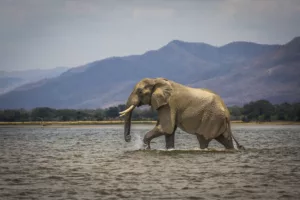
I’m always looking for camps that combine exclusive access to wilderness with comfortable accommodations, so I’ve been particularly excited about the new openings in Southern Africa by Wild Expeditions, who have made a name for themselves operating experiential camps in off-the-beaten-path destinations like Madagascar and Ethiopia.
This October, I was fortunate enough to join a small group of global agents to see Camp Hwange and Karangoma in person. Together, they form a mini circuit between Zimbabwe and Botswana that delivers a high-quality safari for a surprisingly reasonable price. If you want to see the Okavango Delta and massive herds of elephants in Hwange without any other vehicles in sight, these two camps are at the top of my list.
My trip across the Atlantic ended with an overnight layover in Johannesburg at the Intercontinental Hotel, which I always recommend because it’s conveniently located 20 yards from the terminal. From there, it’s a short flight to Victoria Falls, Zimbabwe. That’s when the excitement of safari starts to build – I could see elephants milling around the runway from the air! On arrival, the new Zimbabwe online ETA allowed for quick entry, and before long, I was in the back seat of a small Cessna flying towards Hwange National Park. The heat rising from the parched semi-desert created thermals that shook the plane, but we landed at the dusty Shumba Airstrip without incident.
Camp Hwange sits on an over 12,000-acre private concession in the center of the 3.6 million-acre Hwange National Park. Outside this concession, the park is public, but there are few camps in the area, so you will hardly see anyone there who isn’t part of Camp Hwange. We only saw a few stray overlanders from South Africa and a team from the BBC.
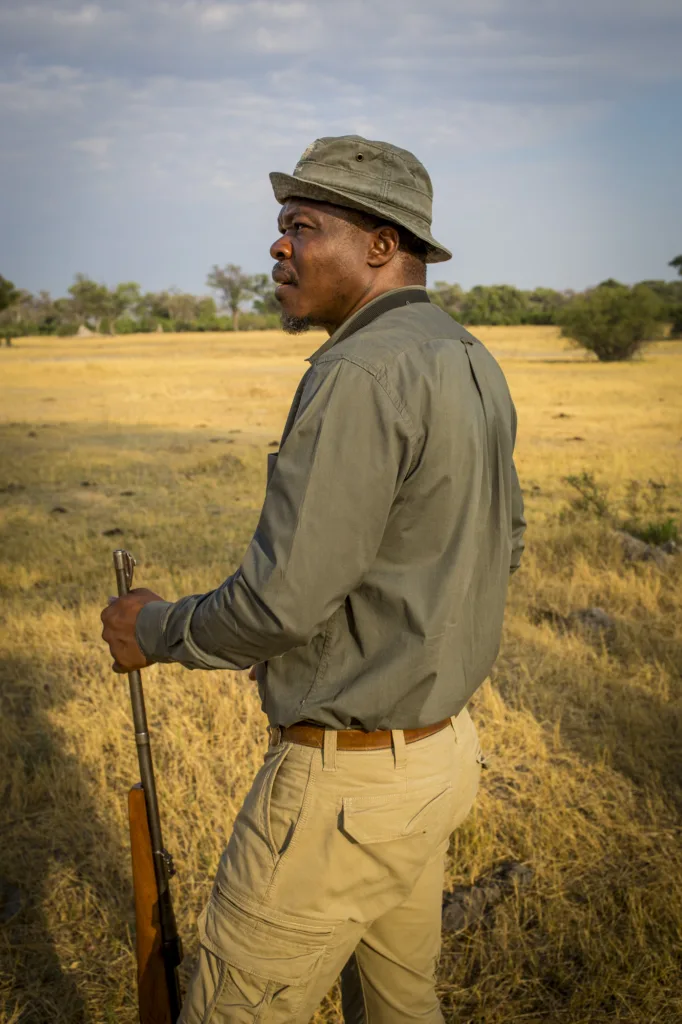
Zimbabwe is known for having some of the best safari guides in Africa, with the top-certified pro level guides having to undergo up to 7 years of extensive training with military-style rigor.
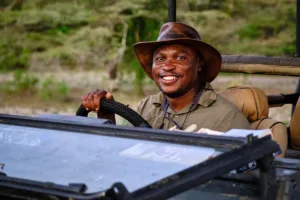
The privacy is part of what makes this camp special – and the guides. Zimbabwe is known for having some of the best safari guides in Africa, with the top-certified pro level guides having to undergo up to 7 years of extensive training with military-style rigor. Our guides, Rob and Con, were no exception to this and were a surprising highlight of the trip.
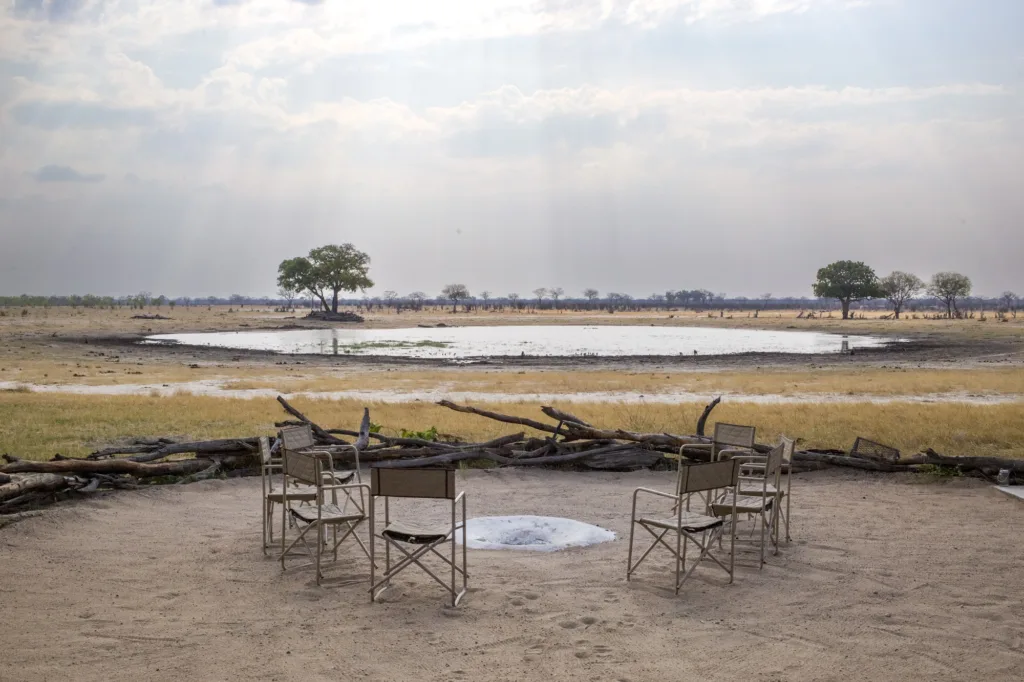
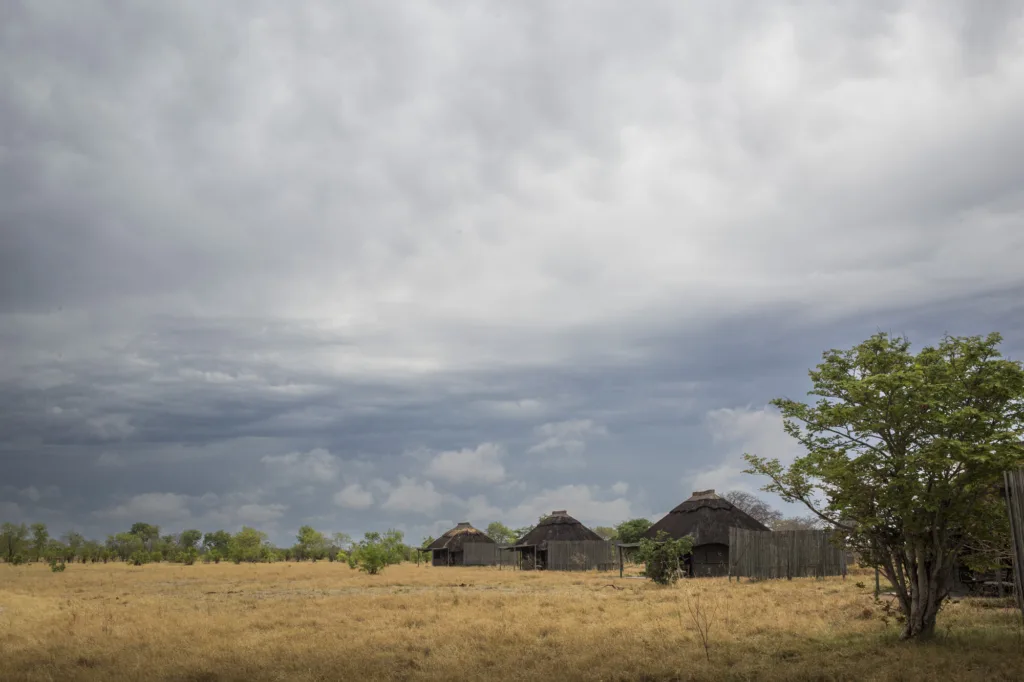
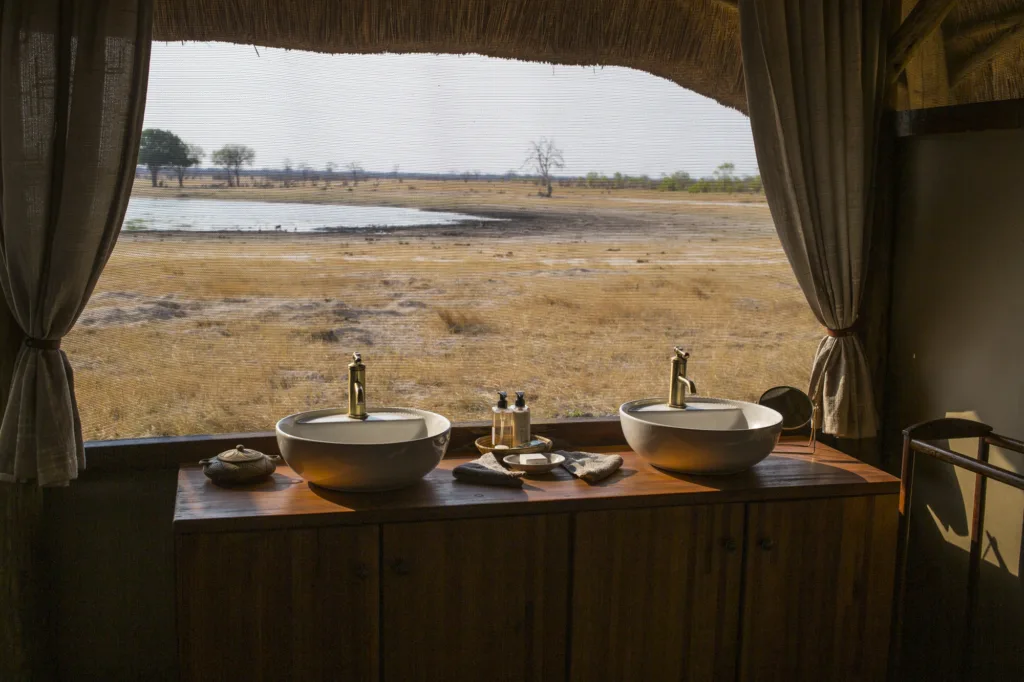
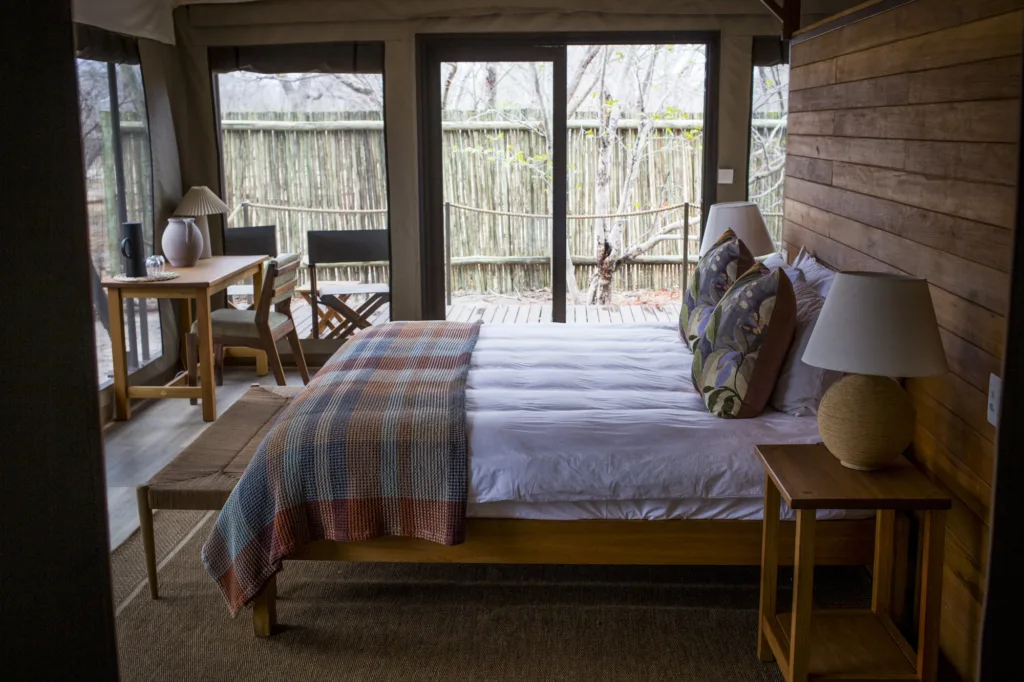
The two of them picked us up at the airstrip and drove us into camp as dark clouds loomed on the horizon. When we arrived at the collection of eight thatched tents and were greeted by friendly staff with a tray of cold towels and appetizers. This camp is completely off-grid, but you wouldn’t know it — there is plenty of ice, ceiling fans, and hot solar-heated showers. My room was spacious with an unmatched view of the waterhole, where two of my favorite birds, crowned cranes, were feeding. It fits into my favorite room category, which I call “all that you need, nothing you don’t.” It’s comfort without any frills: the bed was cozy, there are plenty of outlets, decent internet, and a spacious shower.
After a brief moment to settle in, we hopped back into the Land Cruisers with our guides for our first game drive. There were jackals and hornbills everywhere, and saw a good number of elephants. However, the first rains after a long dry season had fallen the night before just south of the concession, which scattered many of the large herds the park is famous for.
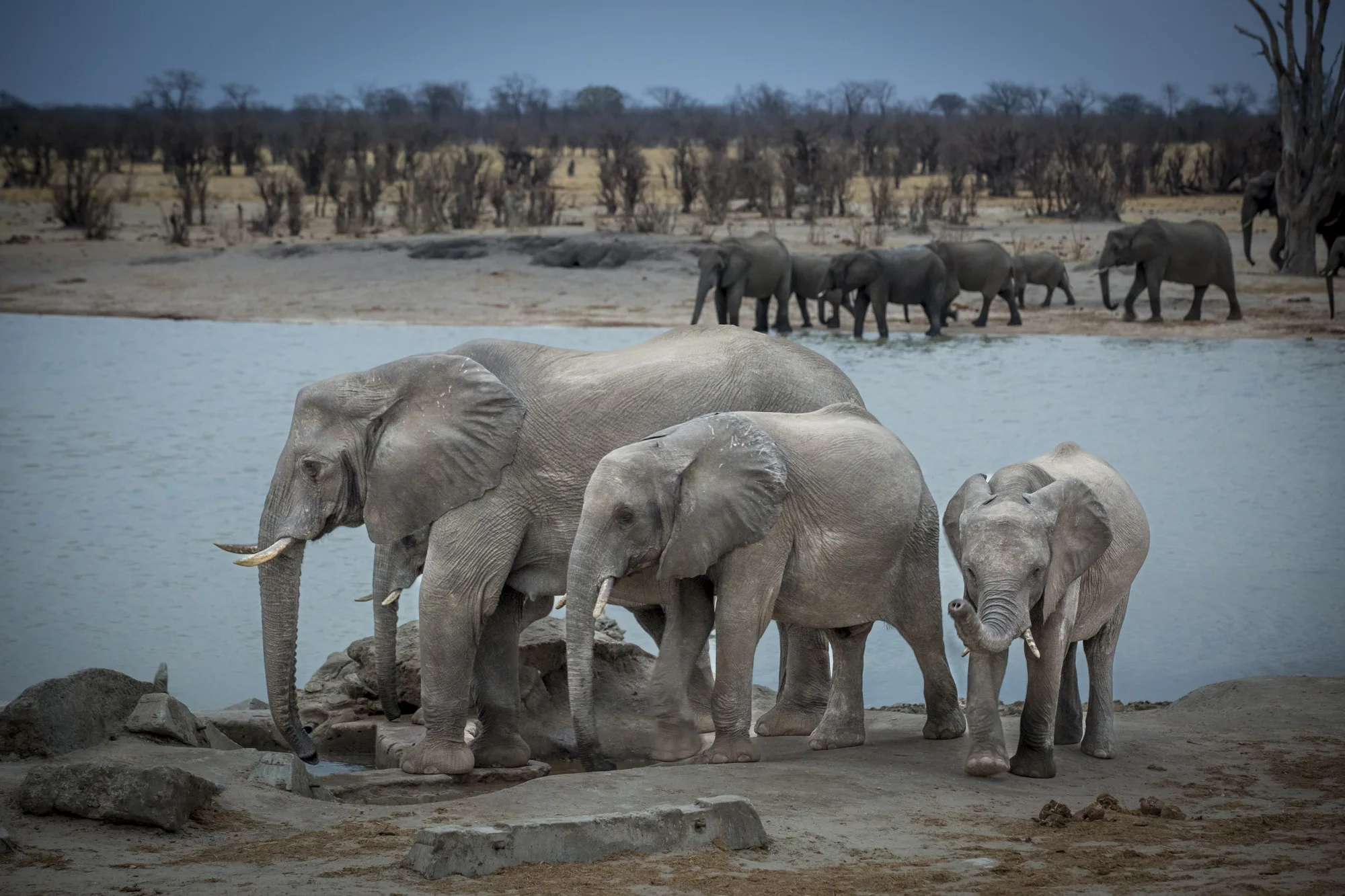
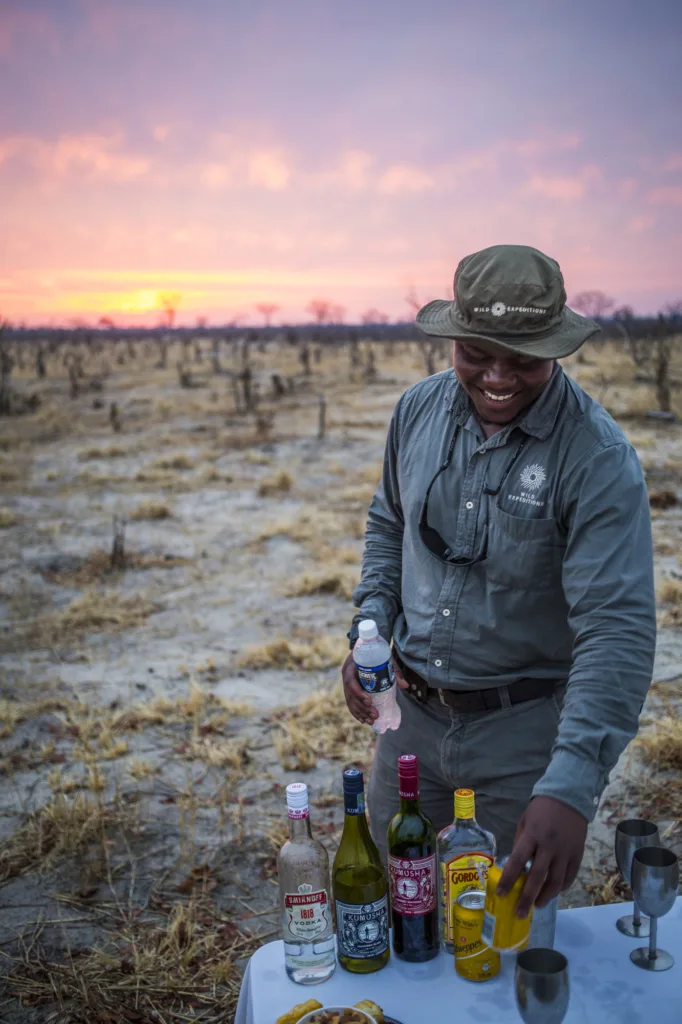
Despite the hindrance to wildlife viewing, the rain offered a multisensory delight. As we drove, the storm clouds gathered around us, and we ended the day with a sundowner in a hide near a waterhole. Lightning crashed in the distance, and a bracing wind preceded the storm that whipped up the ears and the temperaments of a group of 20 elephants that had stopped for a drink. It was a turbulent but ecstatic sighting.
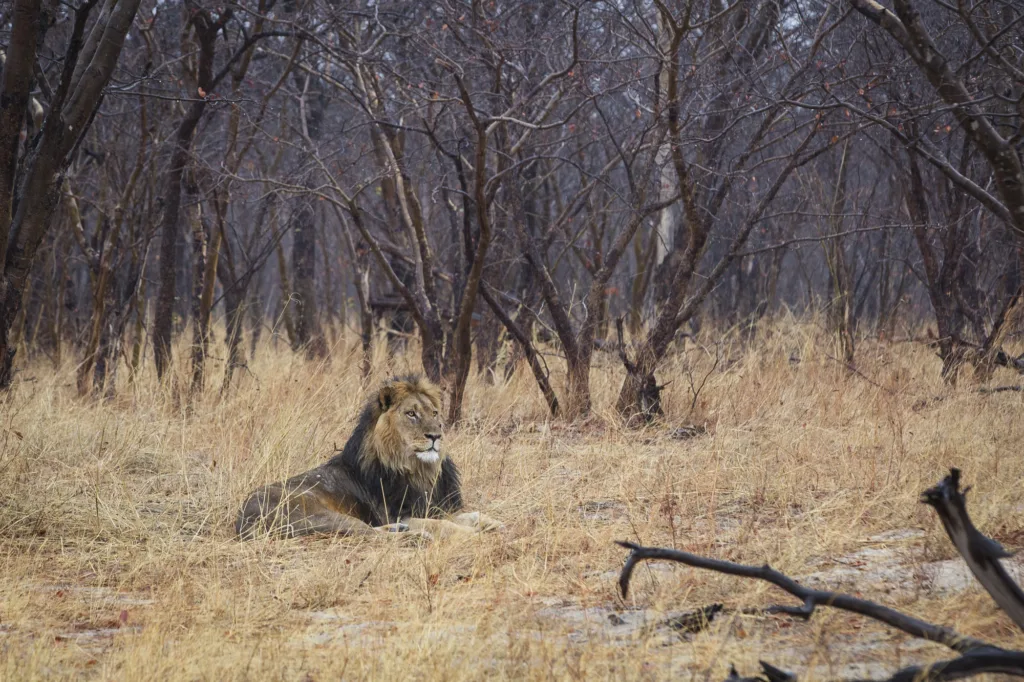
The following day, our guides were flexible with our schedule and didn’t stick to any fixed game drive times so that we could work around the rain. We went for a mini drive after breakfast to see a gorgeous male lion near camp and then went for an extended walk in the afternoon because the rain had dropped the temperature into the 60s. Walking is one of my primary safari interests and a big draw for visitors to Hwange because of the level of guiding. Our first walk traversed granite kopjes (rocky hills) in the northern section of the park, and while we didn’t see any big game, there was plenty of interest from birds, elephant bones, high viewpoints, and fresh leopard tracks.

Our impromptu evening walk was likely the most memorable safari moment I’ve ever had. While out for a late-afternoon game drive, Rob spotted a lone bull elephant in the distance among the teak and mopane woodlands. I couldn’t see the elephants at first, but we stopped the car to walk in for a closer look. Before setting out, Con sprayed fine dust from a bottle to check the wind direction, and we were well positioned downwind from the elephant. Guides will never approach groups of young male or female elephants who are more temperamental, but here they are known for approaching older bulls out of must.
My mind was surprisingly calm and unafraid throughout the whole encounter, but my heart was thumping hard in my chest.
As our group entered the sparse woodland, I could finally see flashes of an elephant silhouette. If you weren’t paying attention, you would think it’s a termite mound. Elephants have a magical ability to blend in to the environment despite their size. Now under Rob’s direction, our group went completely silent, fell in single file, and hunched low. We arrived in the clearing where the old tusker was grazing. He stood almost 11 feet tall, but acted nonchalantly and paid no attention to us. After a moment, he slowly walked away, and we follow, staying downwind and moving between termite mounds for cover.
We followed the elephant for a few more minutes undetected before he slowly turned to face us and forcefully shook his head sending a cloud of dust into the air. This was his way of letting us know he preferred privacy. The giant creature then approached the group to inspect us. Rob instructed us to go low to submit. After a moment of consideration, the bull stepped little too close for comfort, and Rob stood and clapped to confront the elephant. We stood with Rob from behind the safety of the termite mound to show our numbers. From there, I can only say that Rob had an extended negotiation with the elephant, exchanging gestures and words in calm succession. It was fascinating to watch. The elephant’s tail remained relaxed throughout, but it finished the conversation by crushing a fallen branch with its foot as a sign of power.
Rob flashed a smile and a thumbs-up, signaling it is time for us to leave, and we walked away towards the sunset. My mind was surprisingly calm and unafraid throughout the whole encounter, but my body felt something else and my heart was thumping hard in my chest. It was a humbling experience that made me feel small in the best of ways.
Watch the encounter on my Instagram
Vic Falls is such a unique place – a small town where you can enjoy fine dining at a restaurant like Baines, and then encounter elephants crossing the road on your way back to your hotel.
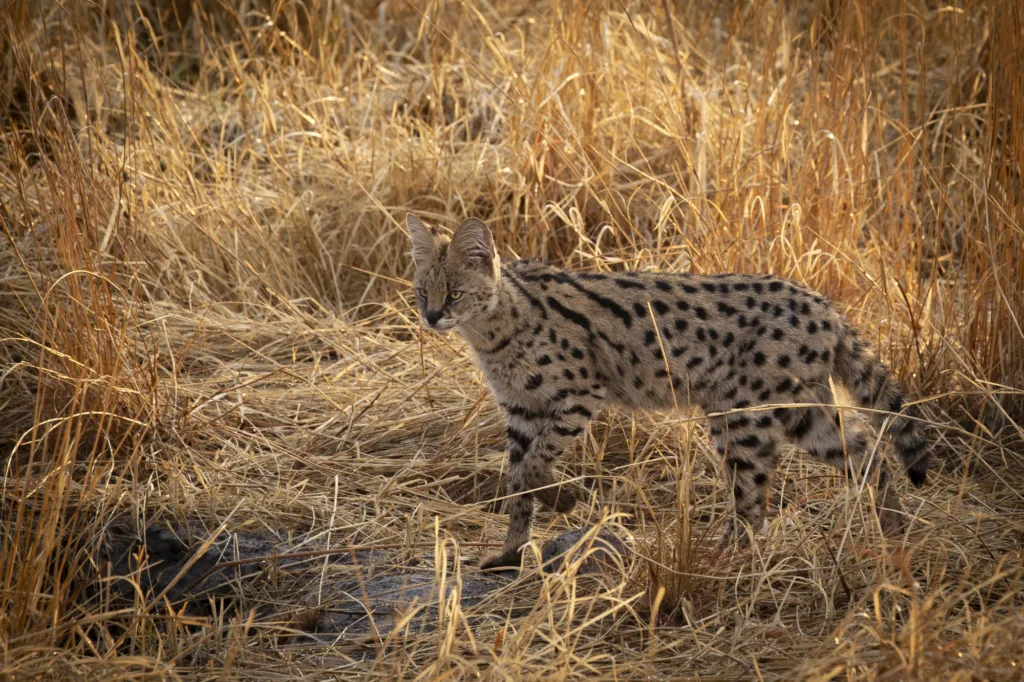
We left the camp the next morning, wanting another day or two to walk with Rob into the north of the park to track rhinos, but we wanted spend some time in Victoria Falls before departing for Botswana the next day. On our last game drive before heading to the air strip we were treated to an up close encounter with the rare serval cat as a farewell treat.
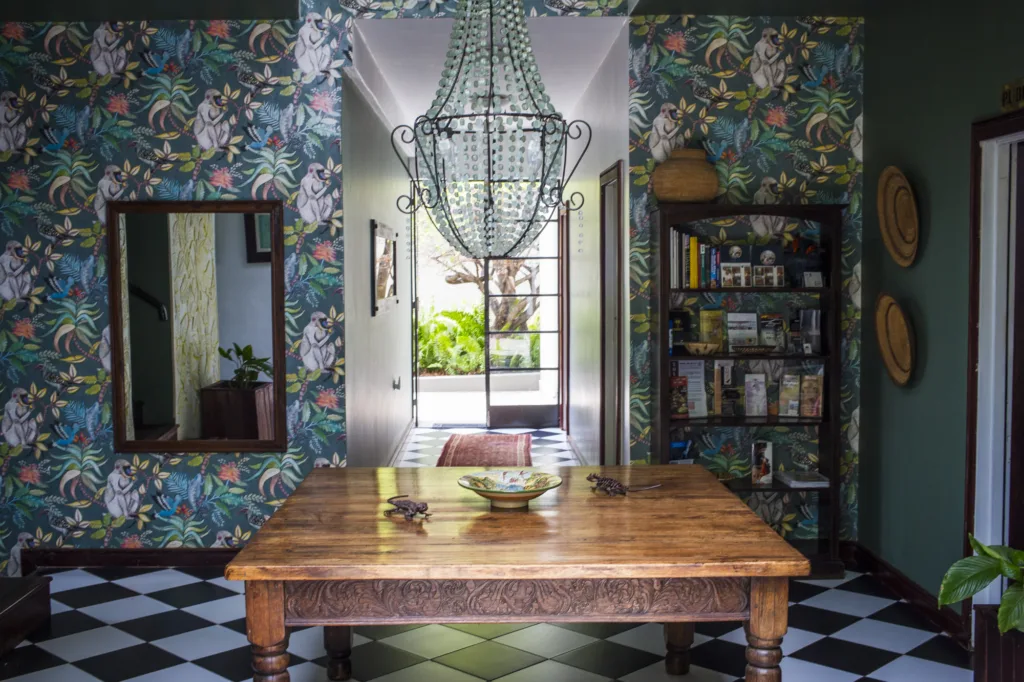
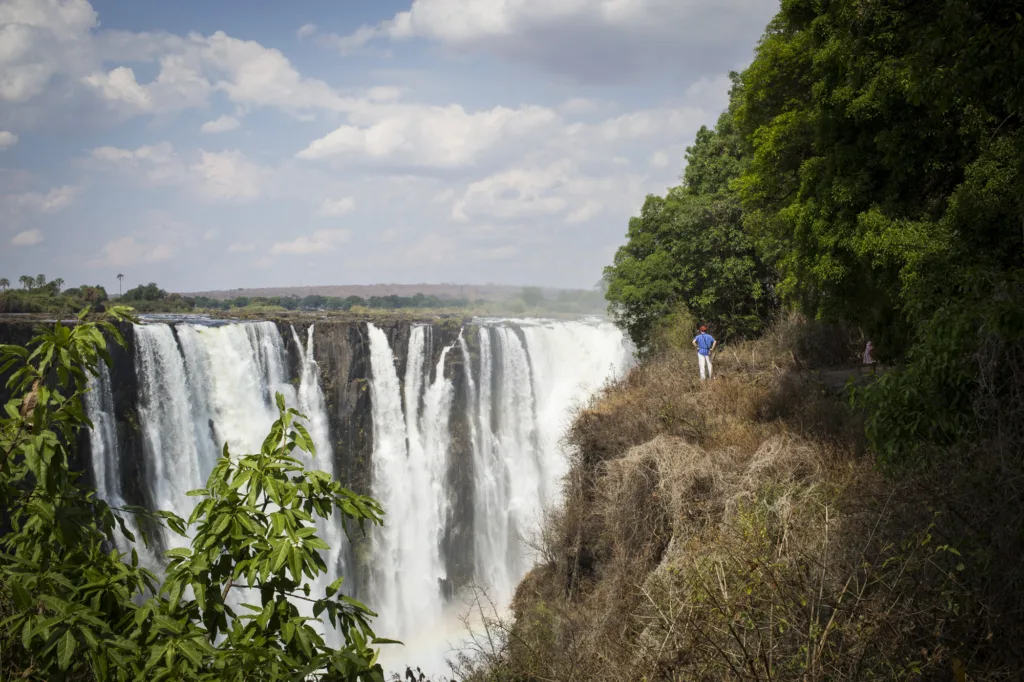
Back in Victoria Falls, our stay at the charming 528 Victoria Falls guest house was the perfect interlude for the safari. We were able to dust off, enjoy some time by the pool, shop for souvenirs, and see the mighty Zambezi River spill into the gorge, flanked by rainbows. Vic Falls is such a unique place – a small town where you can enjoy fine dining at a restaurant like Baines, and then encounter elephants crossing the road on your way back to your hotel.
The next morning, we set out with our driver for the Botswanan border, about an hour and a half from Vic Falls. After an extended but uneventful crossing, we caught a flight from Kasane Airport to Vumbura Airstrip in the Okavango Delta, section NG12. There is no airstrip near Karangoma, so the journey to get there culminates in a 20-minute helicopter flight to the camp. Any helicopter ride is a blast, and flying over the Delta was a particularly spectacular way to start our Botswana adventure.
This conservation area covers 220,000 acres with only a few villages and one other small camp besides Karongoma.
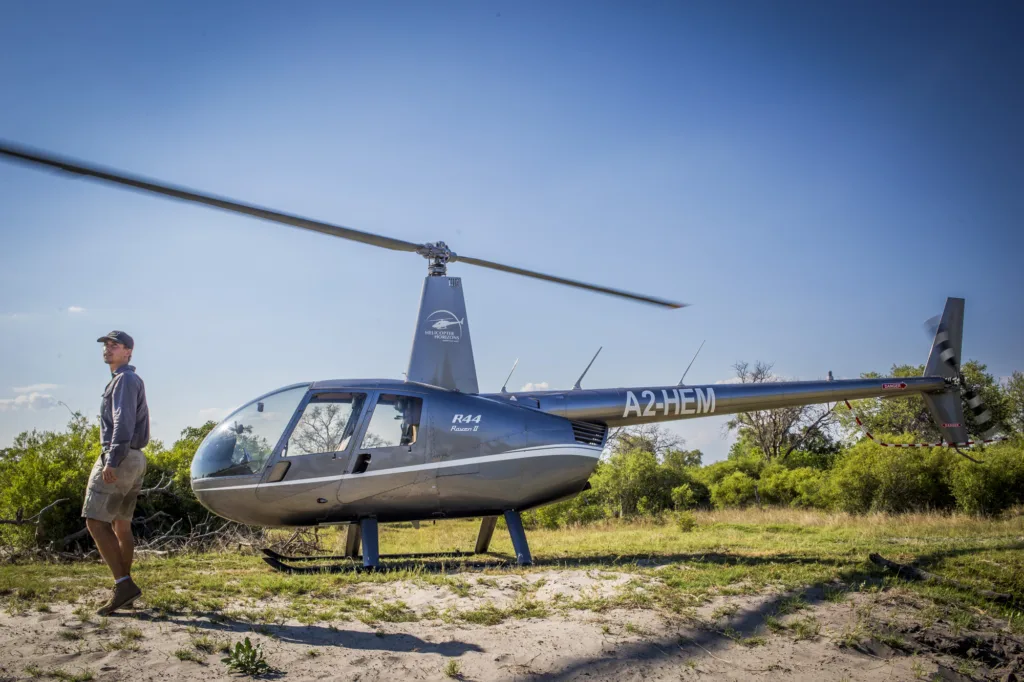
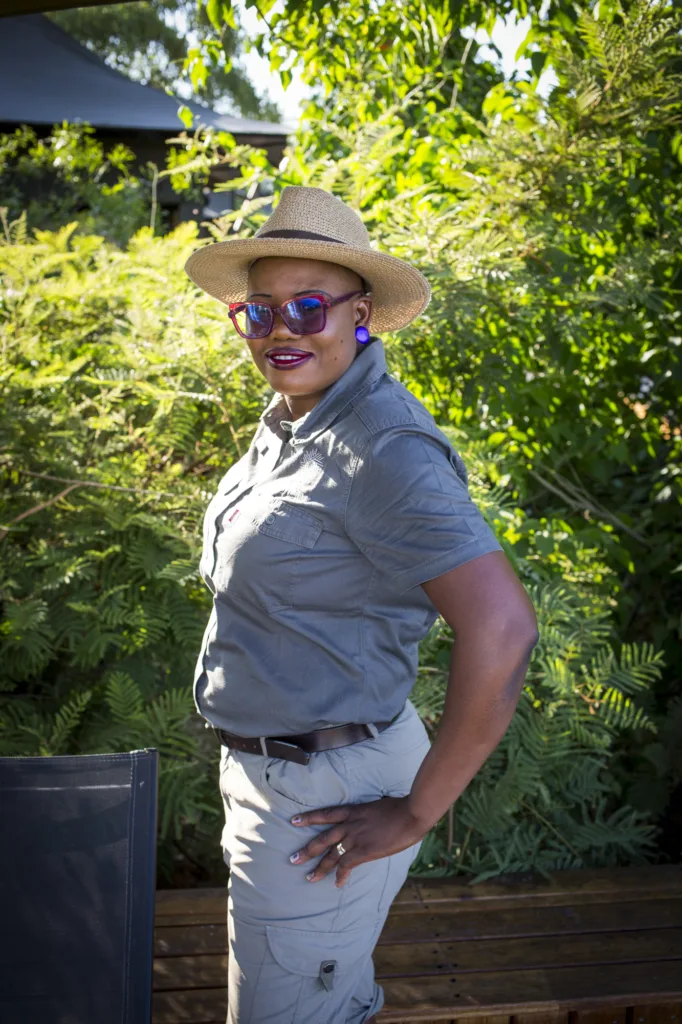
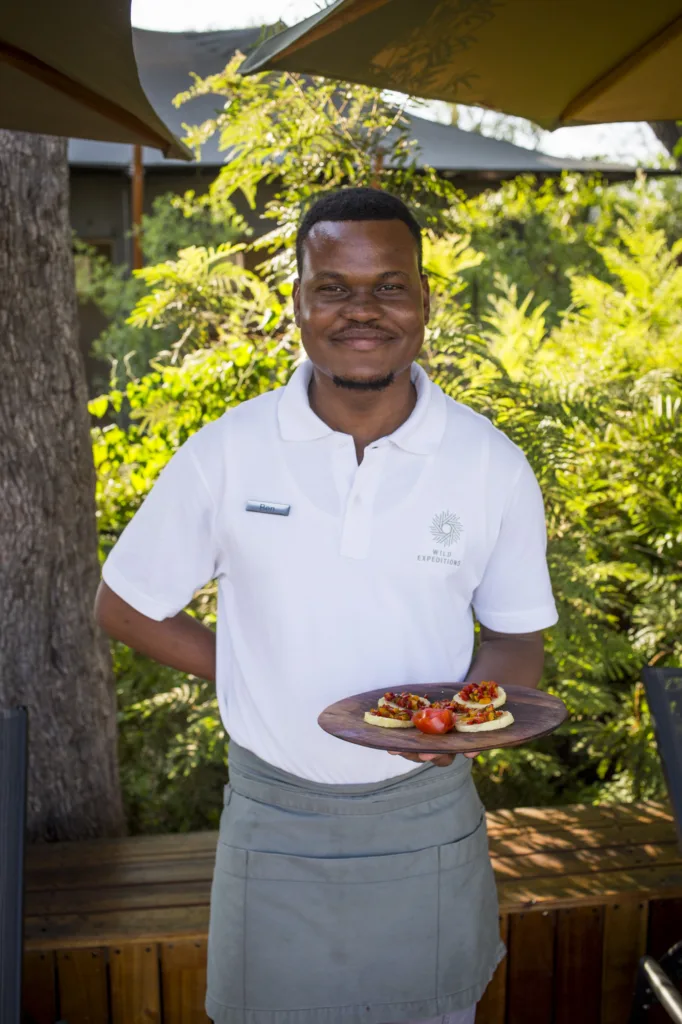
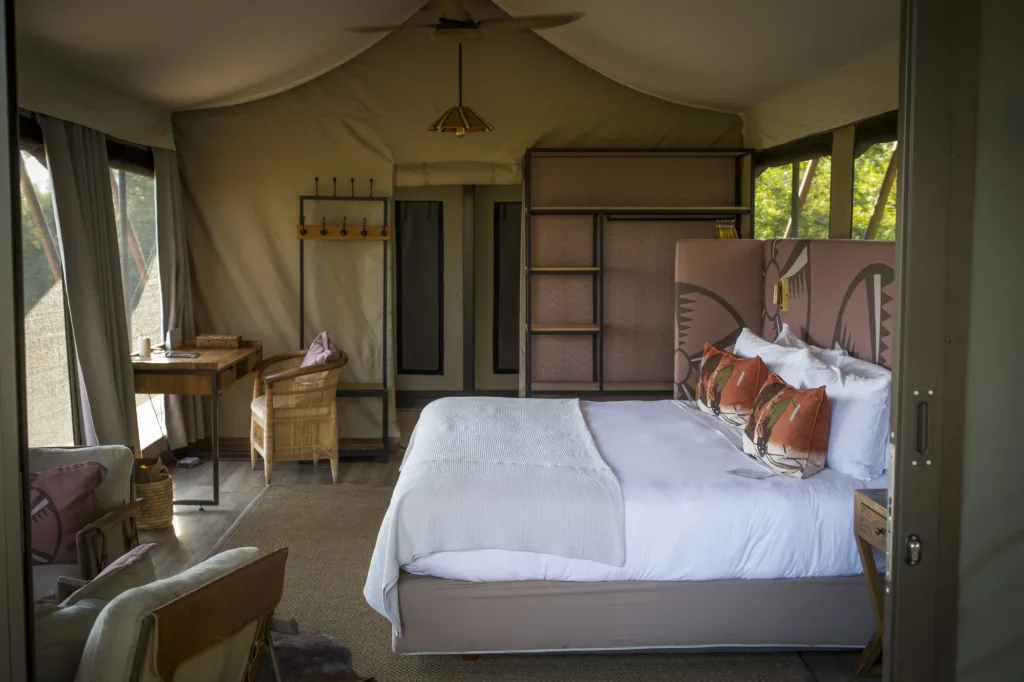
Upon landing in a grassy clearing in what appeared to be the middle of nowhere, our guides, T.K. and Robson, drove us to camp. Maggie, the perenially stylish manager, showed us around, and it was clear that this camp was brand new. The facilities were in excellent shape, and the tents were large and included writing desks and outdoor showers that overlooked a dry floodplain. Ben, our waiter, brought us some canapés from the kitchen, which consistently delivered delicious food throughout our stay. We then set out on our first game drive and couldn’t have had better luck.
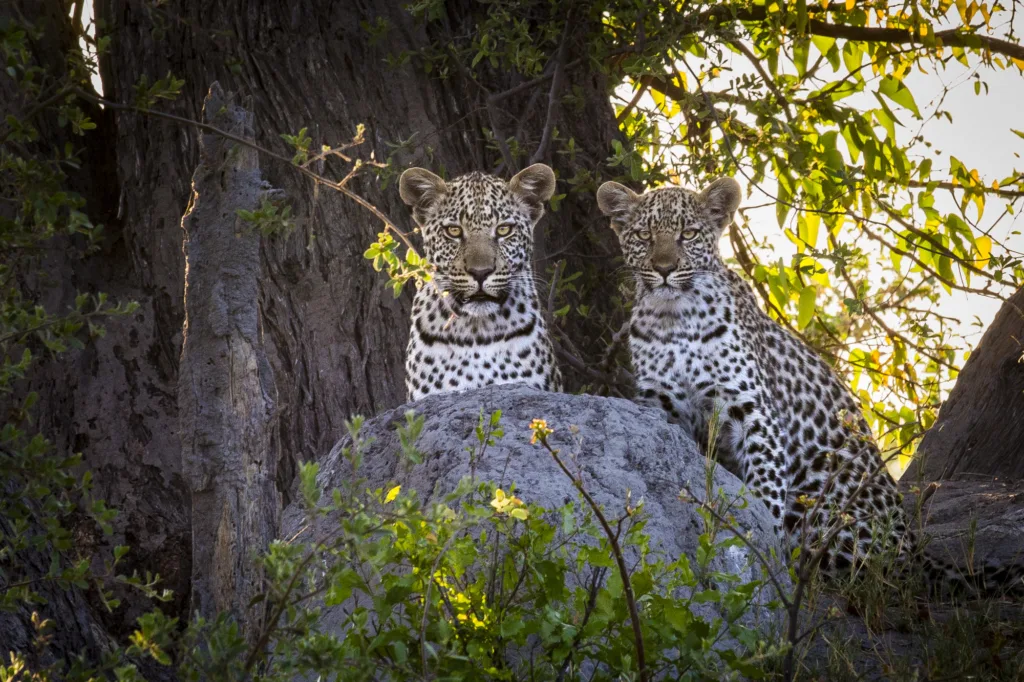
In true Delta style, we drove through a few flooded areas before coming across a cluster of large termite mounds where a leopard had been seen earlier. To our surprise, there were two leopards perched there – an adolescent brother and sister awaiting the return of their mother with dinner. The two were curious and photogenic, and we were able to watch them for at least 20 minutes before deciding to leave them in peace and enjoy a sundowner nearby.
The next day, I was excited to be out on foot again, and T.K. taught me a lot about walking in the Delta. The soil was so sandy that it felt like walking on the beach, but because of this, it preserved excellent animal tracks. We followed the path of lions, which seemed to be moving toward a nearby village where cattle are easy prey. Fortunately, the camp supports the nonprofit CLAWS, which monitors lion movements and alerts villagers to their presence.
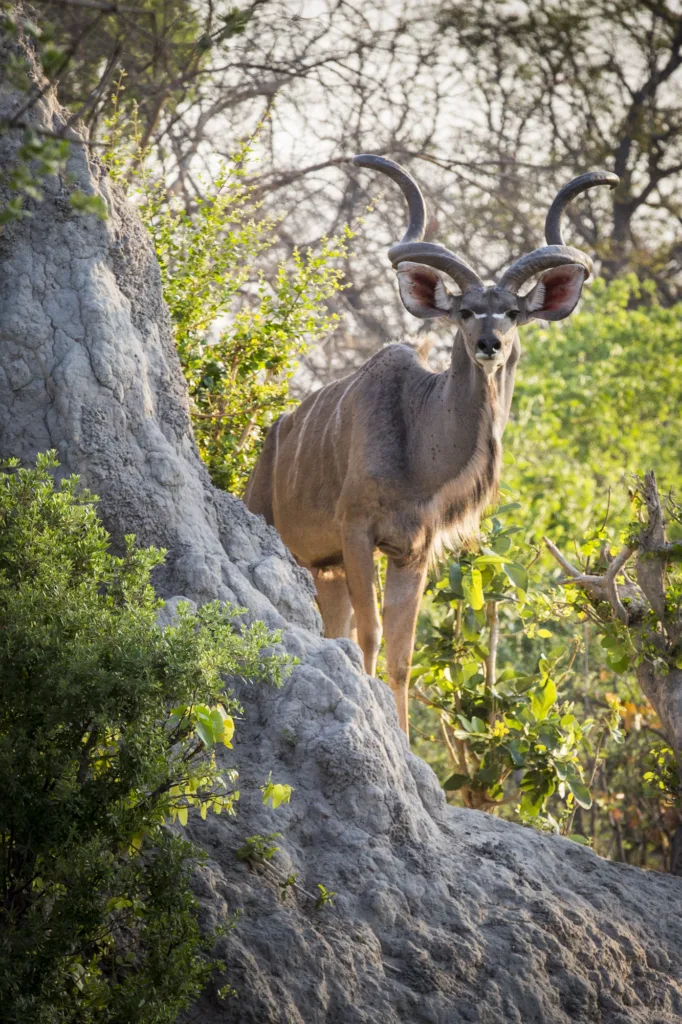
We never saw the lions, but NG12 is a big place. This conservation area covers 220,000 acres with only a few villages and one other small camp besides Karongoma. The size and newness of the camps mean that animals can be more elusive here. It’s not a zoo like some reserves, but visitors will appreciate the total wildness of it all. And despite the size, we had great elephant sightings and saw more zebras than I can count. Herds of up to 500 zebra were common, with kudu and other antelope interspersed within them.
It was like looking into the eye of god and was the perfect send off for an epic safari.
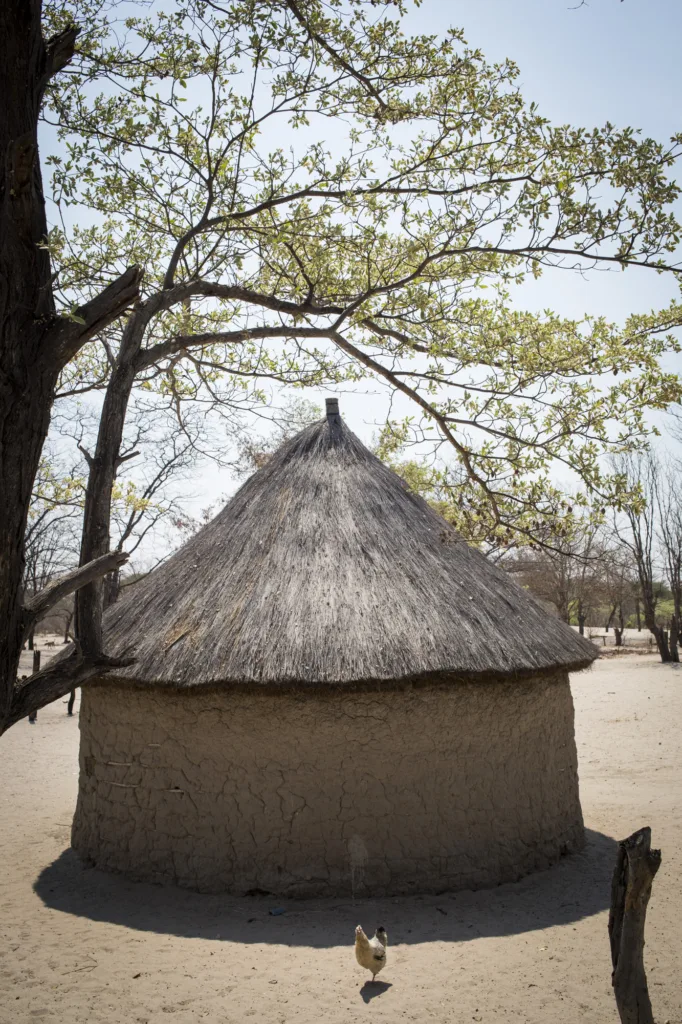
Our next day was filled with a an extended game drive to the nearest village, Gundingwa. At 2 hours away, it wasn’t exactly close, but it gave a more complete picture of life in the Delta. Plus, we were able to buy some of the gorgeous hand-woven grass baskets that are on display throughout the camp.
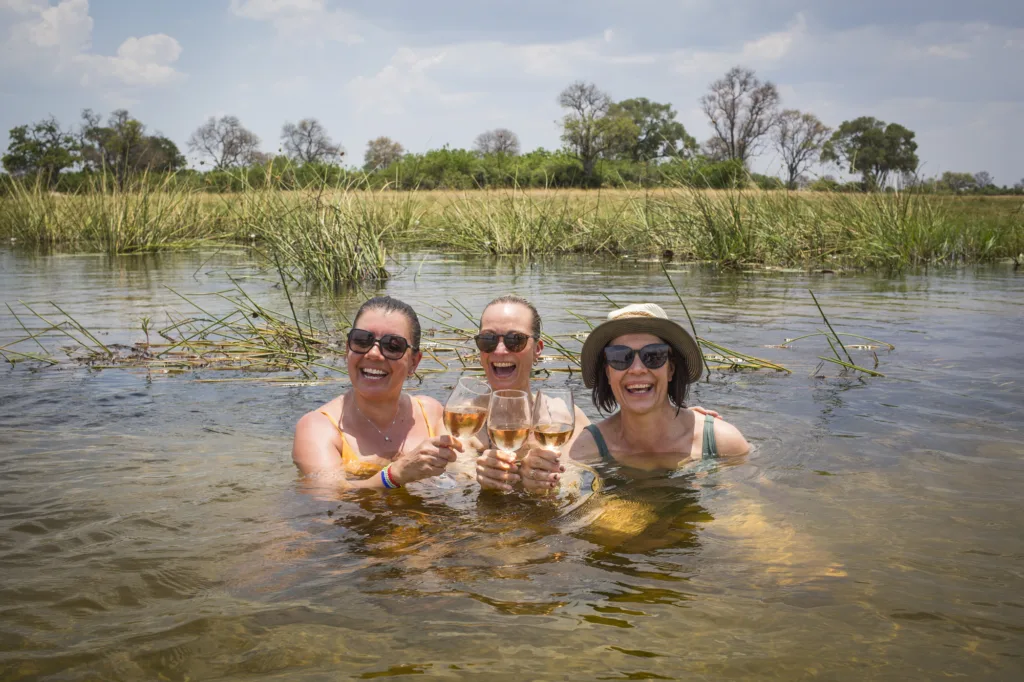
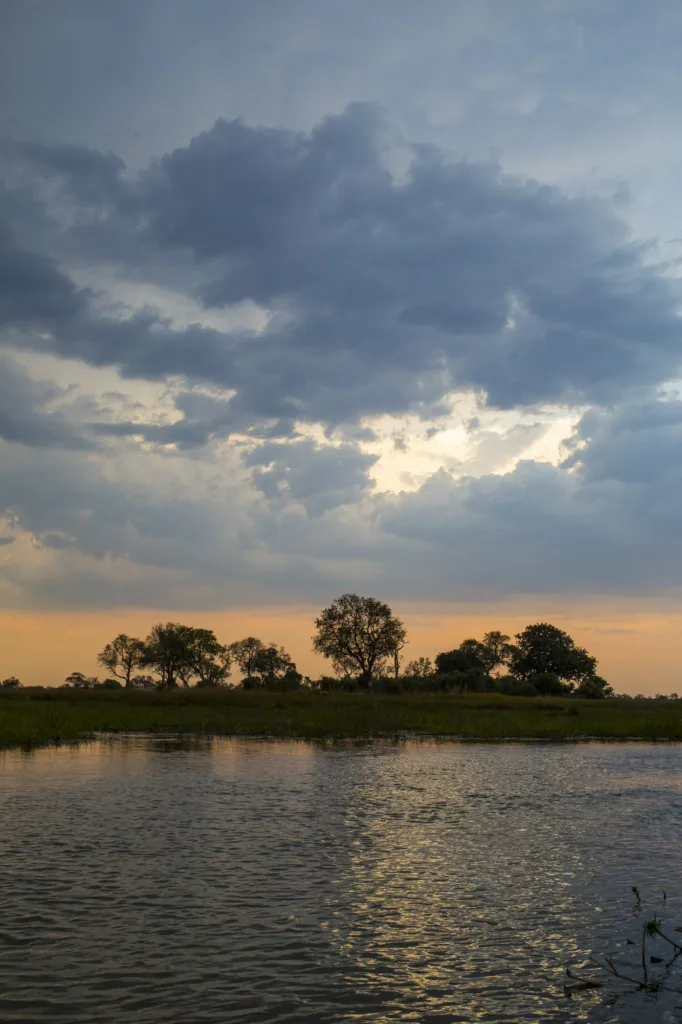
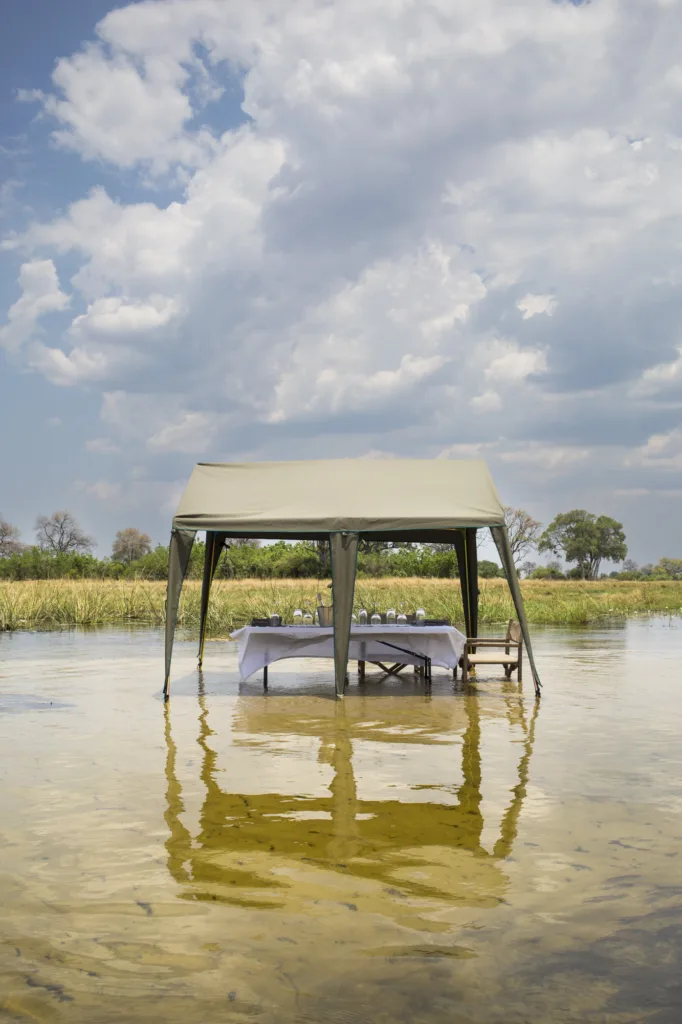
The highlight of Botswana was a surprise dip in the nearby Selinda Spillway. The camp set up a lunch and drinks for us, along with a tent in the water where we could enjoy a swim within sight of a pod of hippos. We loved this so much that we tried to replicate it on our last night, but the rain clouds closed in on us again. Our guides pivoted to a boat ride in a scenic area, where we saw one of the most incredible sunsets. As the sun neared the horizon, the clouds clustered around it without obscuring it. Lightning jumped between clouds, giving the impression that electricity was erupting from the sun. It was like looking into the eye of god and was the perfect send off for an epic safari.
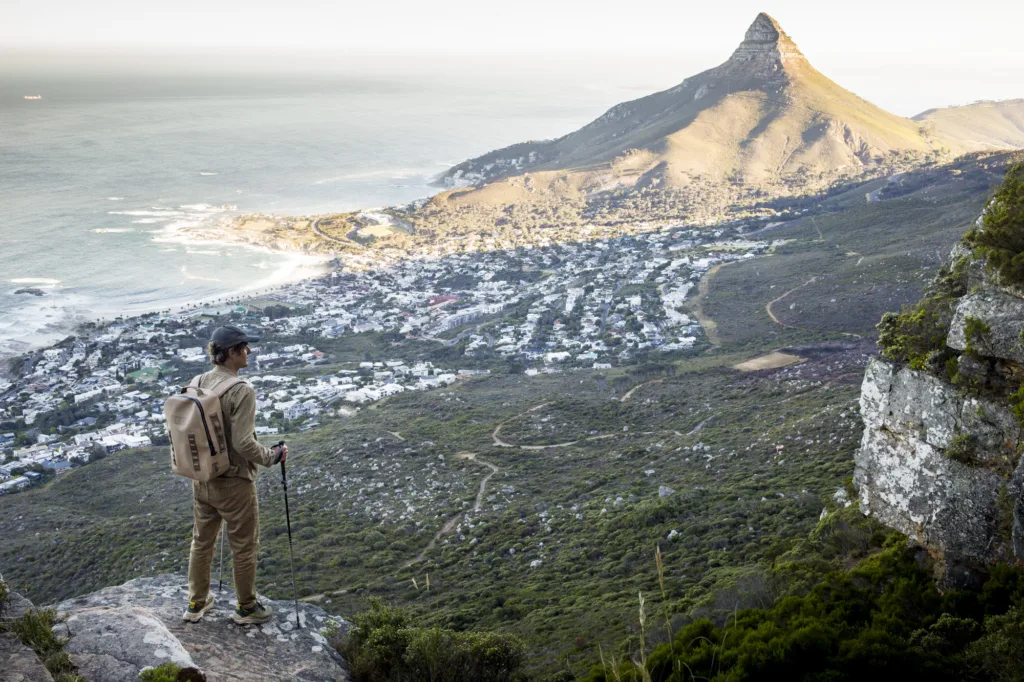
I recommend visitors try alternates to the popular Platteklip Gorge trail, which is more of an extended stair climb.
We slept in the next morning, satisfied with how much we had seen. It was a long way home, and I planned a few stops along the way. First, a burger at the Duck Cafe near Maun airport and then a whirlwind 24 hours in Cape Town for hotel site inspections. I even managed to sneak in a five-hour hike up Table Mountain via the Kasteelspoort route. It was incredibly scenic, and I recommend visitors try alternates to the popular Platteklip Gorge trail, which is more of an extended stair climb. There are over 350 trails in Table Mountain National Park!
It was a lot to fit into ten days, but I was happy to explore new lodges to recommend to clients. I’m already plotting my return visit to Southern Africa for 2026.
We combine expert knowledge with creative itineraries to make your travel dreams a reality. Contact us for a free consultation.

Get monthly travel news, destination guides, and seasonal offers delivered to your inbox.